
I regularly patrol gallery sites like S5-Style and httpster. Web galleries are fun to browse. I especially love the statement written on httpster's site — the phrase totally rocking websites — it just sounds cool.
Httpster is an inspiration resource showcasing totally rocking websites made by people from all over the world.
So here's a rocking website, by my own definition.
The Apollo 11 Moon Landing in Augmented Reality
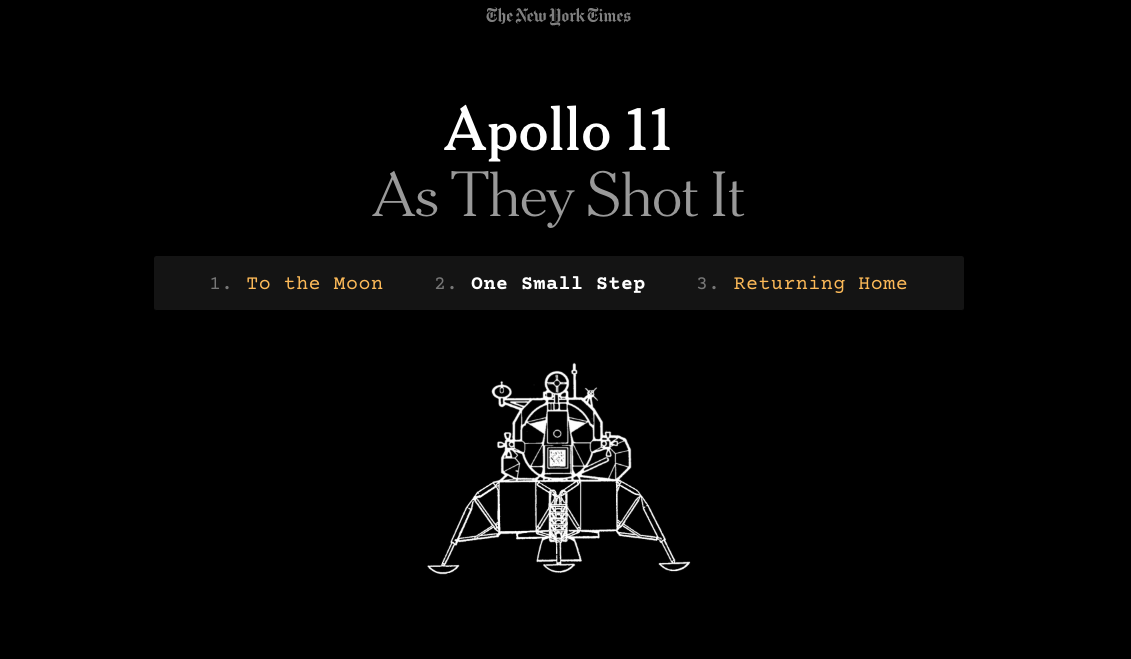
The Apollo 11 Moon Landing in Augmented Reality - The New York Times
Since it's in English, I can't go into all the details, but this is a feature page from the New York Times. Every year they put together a collection called Visual Stories and Graphics, and I believe this is one of the entries. NYTimes has so many categories that it's hard to find these. Every site in this series (?) is well worth exploring, so I highly recommend it.
I found this a while ago, so I'm not sure exactly when it was published, but judging by this tweet asking "what do you think about taking photos on the Moon's surface?" — it seems to have been around July.
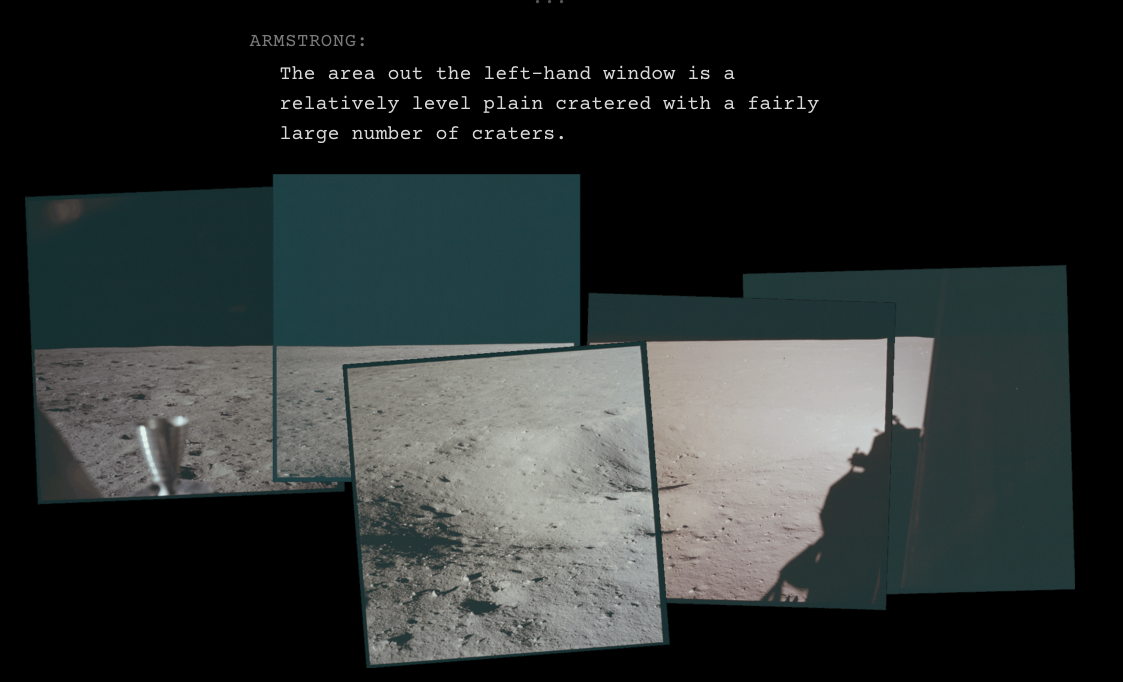
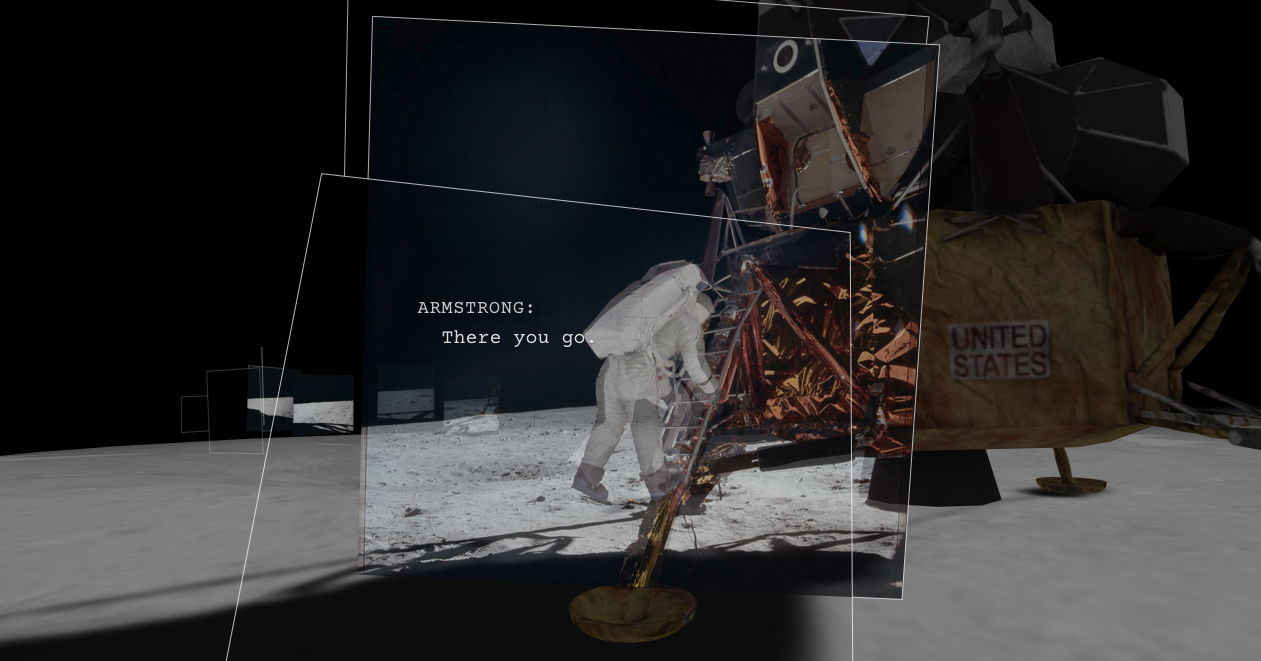
The exchanges between Houston and Captain Neil Armstrong following the Apollo 11 touchdown on the Moon are rendered in Courier, a font made for typewriters.
As you skim through the text, photos appear between the lines, and animations guide you to understand under what intent and how each was taken at the time — it's all handled with great care.
As you keep scrolling, a 3D model of Apollo 11, the lunar surface, and white frames rise up from behind the scrolling text. Depth gets added to what had been a flat rhythm, and you're pulled in all at once.
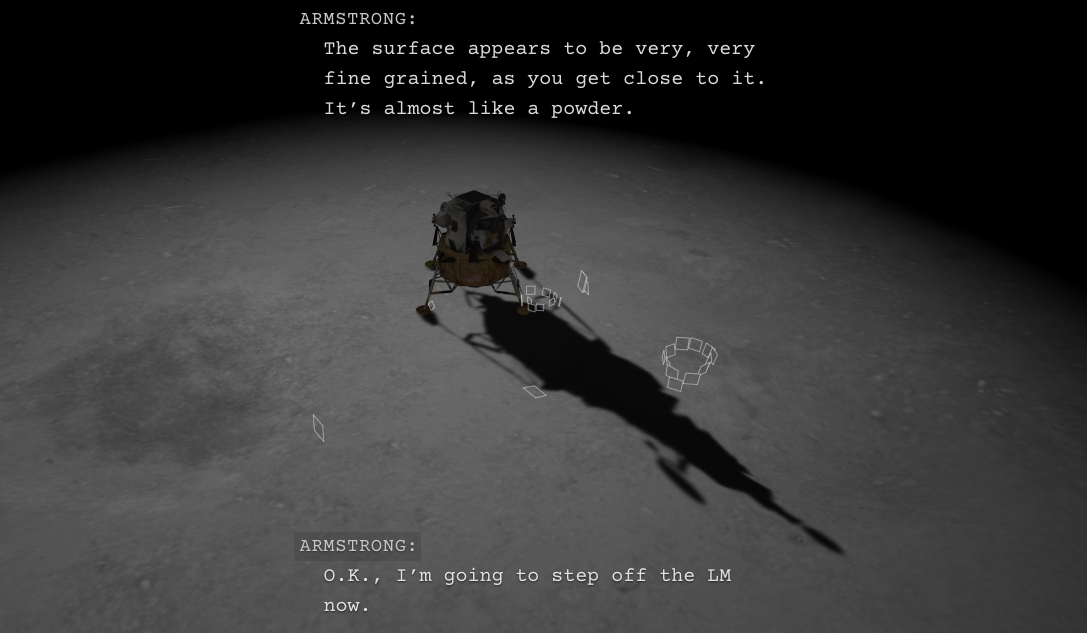
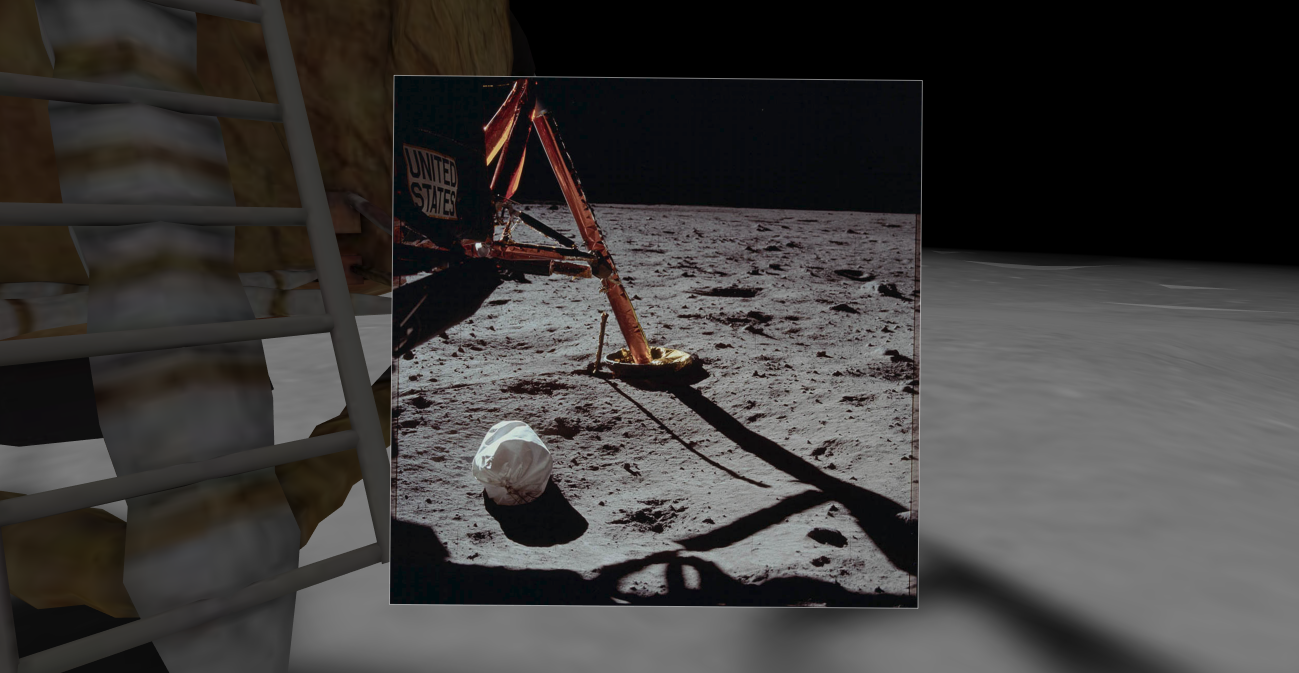
Watching actual photos taken on the lunar surface while following the exchanges between the Apollo 11 crew and Houston — a simple structure of information, yet it makes this quiet moment in space feel like a dramatic, giant leap for humanity. It works on smartphones too, and if you have the NYTimes app installed, there's an AR-like feature where you can view photos based on the direction you're pointing your phone.
What I think is most impressive about this piece is how little information it uses, and how effortless that restraint feels. It builds its world purely through dialogue and photos, and the way it draws the viewer in feels really comfortable. Rather than cramming in every bit of information and every effect, it makes the most of a handful of well-chosen touches. By weaving the technique of aligning photos with the background through three-dimensional movement into an otherwise plain, understated conversation, the technology itself never becomes the star — the story stays focused on honoring the achievement of the Apollo 11 crew.
Small touches — like displaying a white frame first and then having the photo appear inside it — are clever ways to keep users from getting confused and let them focus smoothly on the content.
I love this piece because you can't sense the creator's ego of "I did this because I wanted to" — and yet the finished product still carries all of that care and attention.
It's great how naturally the technology, the design, and the direction and editing that ties it all together come together.
You need a subscription to view past pages, so I want to follow their Twitter account to make sure I don't miss anything. I'd love to try making a fully custom, one-off article page like this myself someday.


