
.../articles/
The End of the Era of Interesting UI: An Old Story

The End of the Era of Interesting UI: An Old Story

2019.08.02

Huh, I'd never thought about that — but I answered, "Well, there's a lot you can do since it starts with deciding what to build in the first place."

I think that answer was half a dodge. Coming up with content is a director's or planner's job. A designer can think about it too, of course — sometimes that's even preferable. But I don't think that's really what was being asked.

While we were talking, I also found myself thinking: building "fun UI" is kind of a thing of the past now, isn't it.

What comes to mind when you hear "fun UI"?

What I picture is stuff like Flipboard's page-turning animation or Path's menu — apps from around the time the iPhone was exploding in popularity.

Go back a bit further and there were flip phones that opened both vertically and horizontally. Whether you'd even call that a UI is questionable, and looking back, that gimmick itself was genuinely strange. (But I loved it.)

More recently, the Nintendo Switch does interesting things with how it treats its controllers. This game, which got some buzz, also looks like it has nice motion, and I want one.
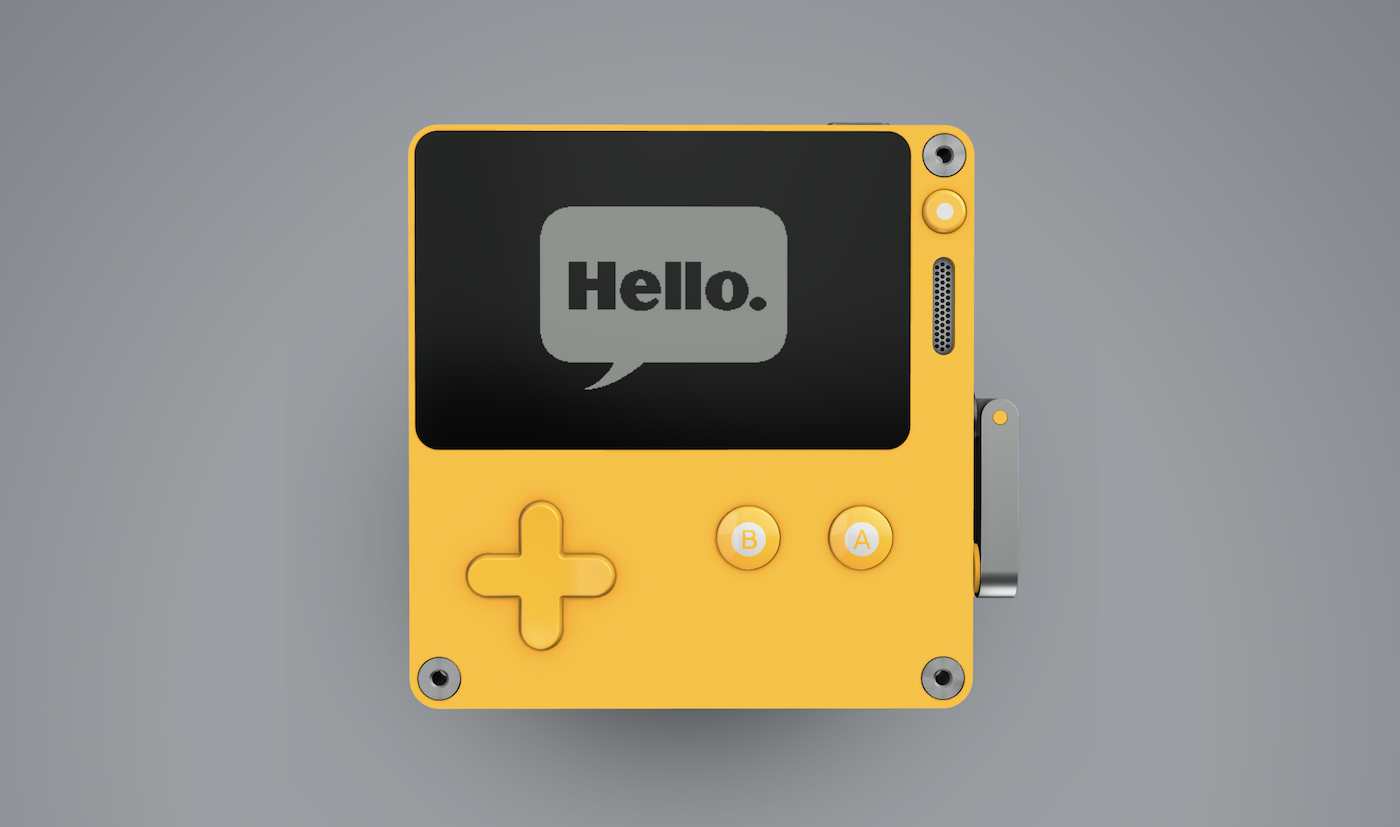
The "Playdate" handheld game console announced by a manufacturer called Panic

I've gone off on a tangent. My examples keep being hardware, but what I wanted to say is that, to me, a "fun UI" carries some kind of "gimmick."

That said, anyone who's been around this kind of thing for a while probably already knew this topic is old news. The days of UIs packed with lots of gimmicks are behind us, and it's already old news that the iconic skeuomorphic camera icon became a clean gradient a while back.

If the whole topic of "gimmicks aren't needed anymore" is itself old news, what comes next?

Making fun, quirky UIs isn't a designer's role. I know that. Solving problems is a designer's role. I know that too. But is a designer's job really just to combine flat, modern UI components?

I think it's actually the opposite.

Combining a limited set of UI elements hasn't changed. But that's not because there's less to do — it's a state where you're now expected to control everything, from animation to user flow to content: "more is being asked of you."

Instead of facing the screen the way you would when creating a work of art, you're now expected to face the user — and there's a bit of loneliness in that. But that's a matter of balance.

How to turn "anyone could have made this" into "only I could have made this" isn't just about appearance. But it isn't just about thinking, either.


I felt like writing something, so I wrote down some things I'd been thinking about recently, and it really did turn into just a personal musing.

It's a company blog, but since we relaunched it partly to let people get a sense of who we are and what we think about as we work, I figure this kind of post is fair game too.


written by

.../article/

Articles

All articles

From Firebase to Vercel, Contentful to microCMS — a migration log written with Claude Code

From Firebase to Vercel, Contentful to microCMS — a migration log written with Claude Code

We moved our corporate site's hosting and CMS, and made it bilingual along the way. The constraints we only found by running against real data were more useful than the migration itself, so this post focuses on where we got stuck.

Can't Read POST Data with Firebase Functions × Remix?

Can't Read POST Data with Firebase Functions × Remix?

How to read POST data from a Remix action when running on Firebase Functions.

Generative AI for Executives and Leaders: An Approach to Self-Driven DX

Generative AI for Executives and Leaders: An Approach to Self-Driven DX

Building a structure where executives and leaders themselves can identify issues and evaluate solutions using generative AI. We introduce how combining this with our hands-on support dramatically improves both the quality and speed of digital transformation.

Deploying a Monorepo Next.js App (App Router) to AWS Amplify

Deploying a Monorepo Next.js App (App Router) to AWS Amplify

Notes on the obstacles we hit while deploying a Next.js app managed in a monorepo to AWS Amplify.

Keeping Production Running Smoothly with Remote Work and Online Meetings [Documentation]

Keeping Production Running Smoothly with Remote Work and Online Meetings [Documentation]

Many production companies have adopted remote work as a result of the pandemic, and we are one of them.

Designing an E-Commerce Site That Sells: How to Find Great Reference Examples

Designing an E-Commerce Site That Sells: How to Find Great Reference Examples

There is no single formula for e-commerce design that sells. Driving revenue requires a solid concept, and getting to that concept requires thorough research.

Productivity Tools We Recommend as a Production Company, Including Services That Work Well Solo

Productivity Tools We Recommend as a Production Company, Including Services That Work Well Solo

With remote work becoming the norm during the COVID-19 pandemic, our team now works from home most days of the week.

We Released Thought Recorder, a Figma Plugin for Keeping a Commit History of Your Designs

We Released Thought Recorder, a Figma Plugin for Keeping a Commit History of Your Designs

We hope this helps web designers who work in Figma. Read on for how to use it.

How to Build an E-Commerce Site, and Which Platforms We Recommend

How to Build an E-Commerce Site, and Which Platforms We Recommend

Shopping online for fashion, appliances, and even groceries is now routine. With the pandemic accelerating the shift, we receive a steady stream of questions about which platform to use and how much it costs.

Generating FastAPI Schema Classes from OpenAPI

Generating FastAPI Schema Classes from OpenAPI

We chose FastAPI, a relatively modern framework, for a Python API project. FastAPI can generate an OpenAPI definition from your backend code, but here we do the opposite: generating FastAPI schema classes from an OpenAPI definition prepared in advance.

View all articles

Contact us